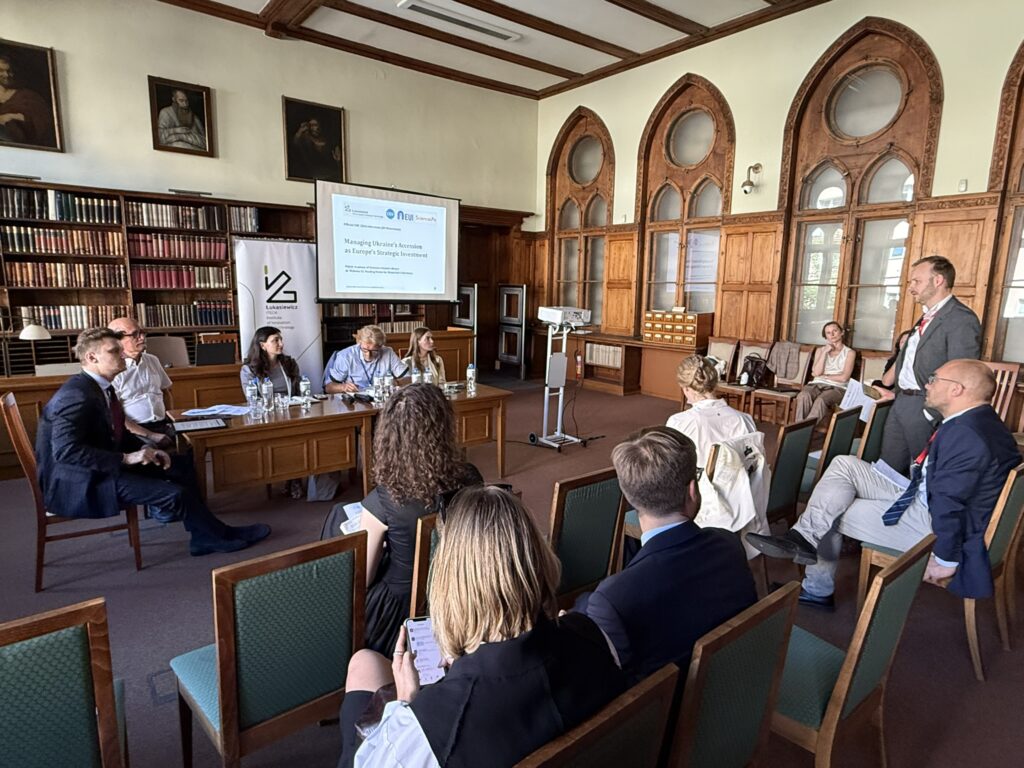
The Enlargement Hub organized a side event at the Ukraine Recovery Conference in Gdansk, Poland, on June 24.
The panel brought together senior policymakers, negotiators and leading academic experts to discuss how Ukraine’s gradual EU accession can become a source of European security, economic renewal and geopolitical strength rather than a burden. Building on an earlier expert workshop held in Warsaw, the session examined the institutional and financial instruments (next MFF, a possible Ukraine Facility II, European industrial policy) needed to align reconstruction, sectoral integration and accession.
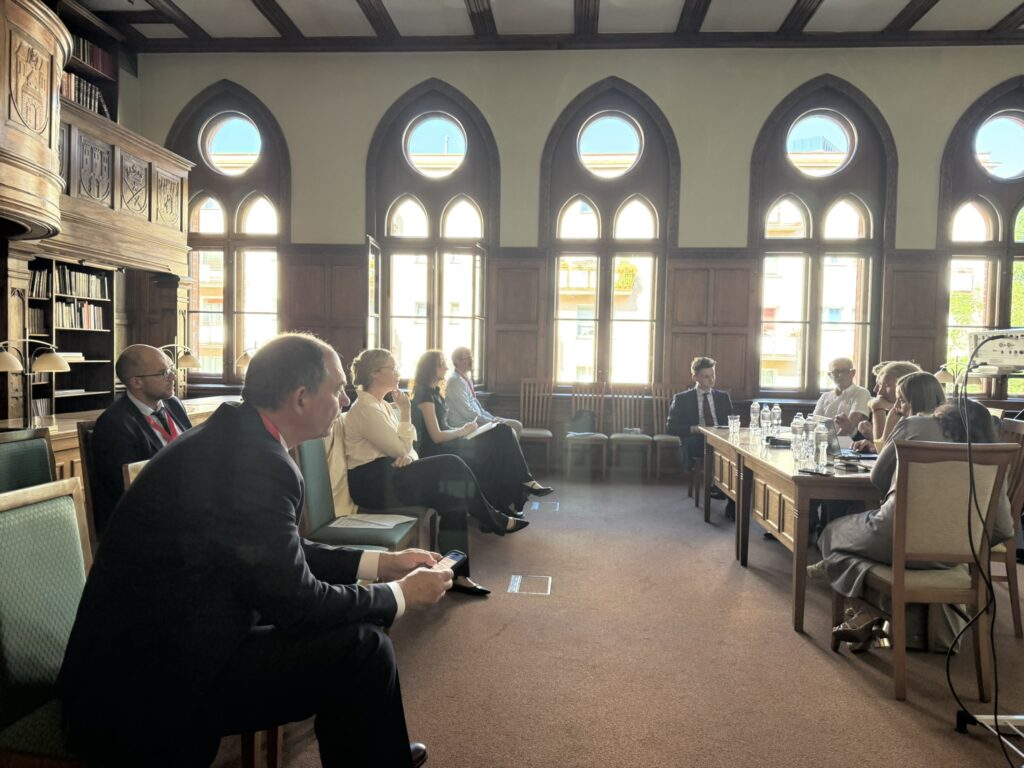
The event was organized by the Łukasiewicz Research Network – Institute of Innovation and Technology (Łukasiewicz–ITECH, Warsaw), in cooperation with the European University Institute – Robert Schuman Centre for Advanced Studies / EU Security Initiative (Florence) and the CEU Democracy Institute (Budapest). The event built on the expert workshop “Making Enlargement Governable” held at the Polish Academy of Sciences in Warsaw on 25 May 2026, organized by the same consortium.
Ukraine’s EU accession is usually described as a promise about the future. In reality, it is already changing Europe today: Ukraine is being integrated through defence production, energy links, transport corridors, reconstruction projects and industrial partnerships. The question is therefore no longer only when Ukraine will join the EU, but whether the Union can turn this ongoing integration into a strategic advantage — becoming more secure, more competitive, less dependent on hostile powers and better connected to its eastern frontier.
The panel started from a positive but demanding proposition: Ukraine’s gradual integration can become a source of European security, economic renewal and geopolitical strength. Done well, it will strengthen Europe’s defence-industrial base, deepen energy resilience, expand European value chains and accelerate Ukraine’s reconstruction and modernisation. Frontline member states — Poland first among them — have the greatest stake in getting this right: as the principal gateway for reconstruction logistics, a leading defence-industrial partner and the EU member with the deepest economic ties to Ukraine, Poland stands to gain the most from a well-governed accession process.
Political support for integration, on both sides, depends not only on aggregate benefits but on the capacity to identify emerging sectoral adjustment pressures early and address them before they strain reform coalitions in Ukraine or public support in member states. The panel will therefore examine the institutions, financing instruments and governance arrangements needed to ensure that reconstruction, sectoral integration and accession reinforce one another — and that new instruments broaden the gains from integration rather than redistribute existing resources.
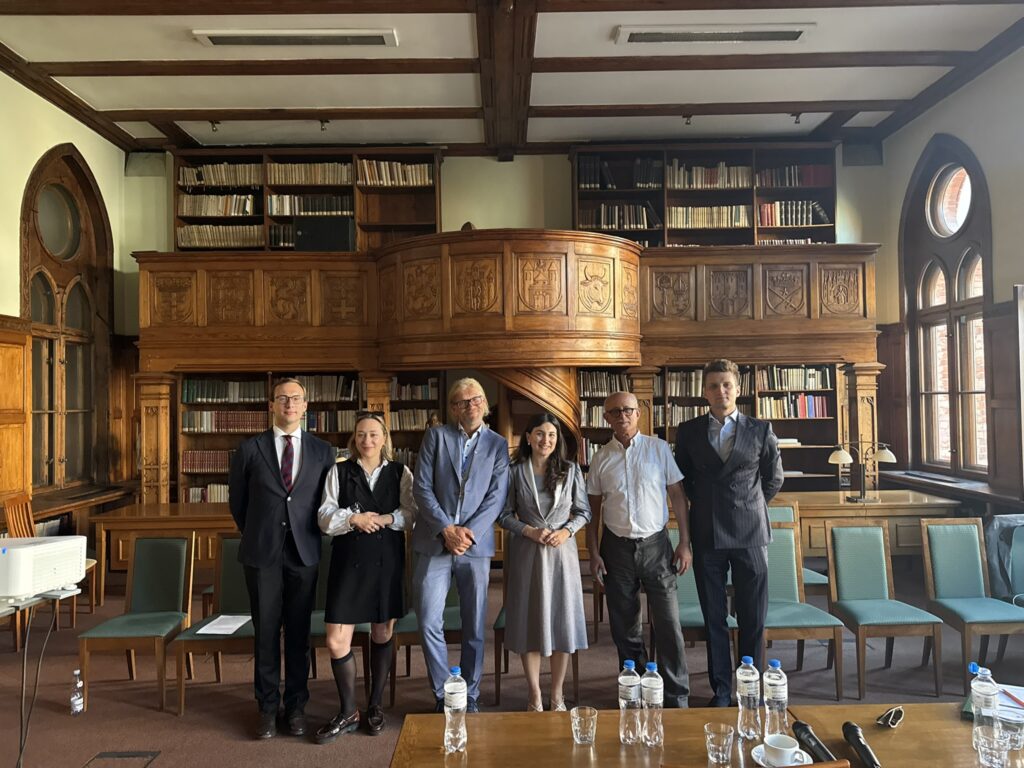
The workshop was co-organized by Łukasiewicz Research Network – ITECH, EUI Robert Schumann Centre and CEU Democracy Institute, under the ENTENTE – Jean Monnet Centre for Excellence project.