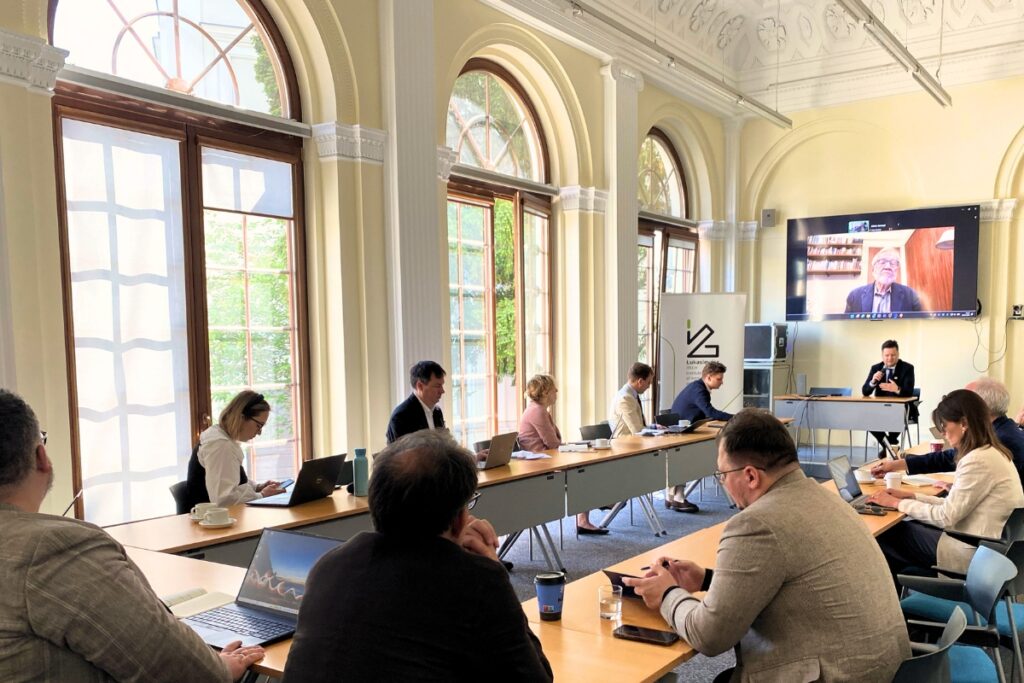
The Enlargement Hub organized an expert workshop at the Polish Academy of Sciences in Warsaw, on May 25, 2026, under the title Making Enlargement Governable: From Managing Costs to Creating Mutual Gains.
At the event, policymakers, experts, and analysts from Ukraine and EU member states, including representatives of the Polish administration, EU institutions, and leading research centers from Brussels, Budapest, Florence, Kyiv, and Warsaw, gathered to address the question of how to make the EU accession process beneficial for both the member states of the European Union and Ukraine.
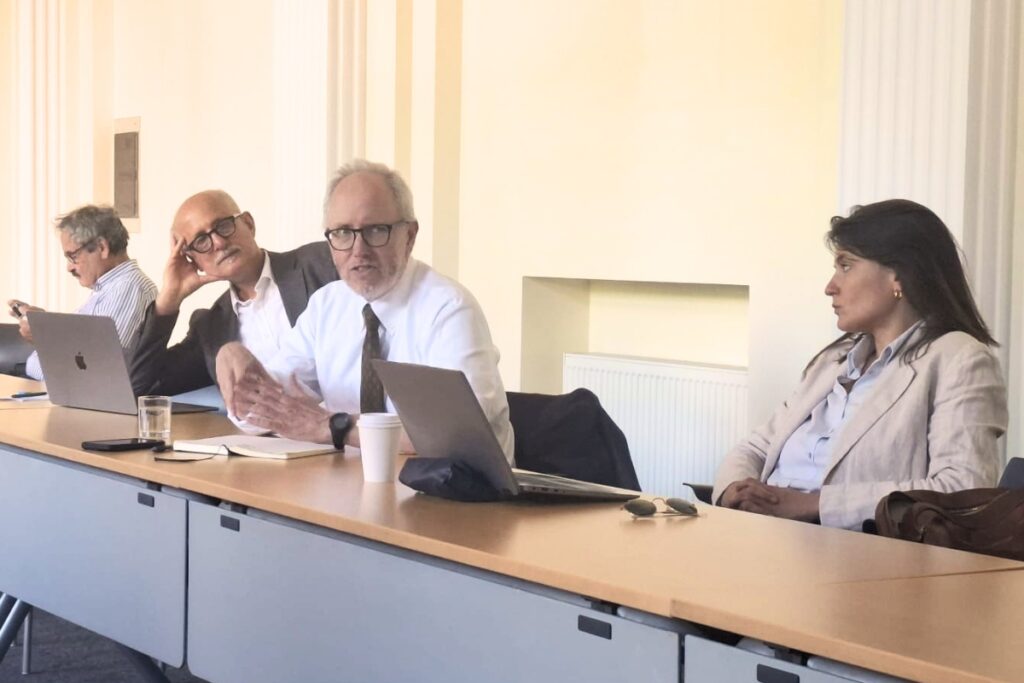
The existing framework for EU enlargement policy was not designed for an accession process unfolding in the shadow of war. As a result, a growing dilemma has emerged: integration that proceeds too slowly risks undermining the European Union’s strategic relevance and weakening Ukraine’s European trajectory, while integration that advances too quickly, without new institutional safeguards, could generate significant political tensions within the Member States. The workshop was conceived as a forum for moving beyond this apparent trade-off.
Rather than presenting a finalized institutional blueprint, the workshop aimed to open a practical policy discussion among policymakers, experts and journalists from Ukraine and EU member states. The goal was to explore whether new forms of coordination could help reconcile the merit-based logic of enlargement with the geopolitical, economic and political realities created by Ukraine’s integration. The discussion builds partly on ideas emerging from both Ukrainian and European policy debates, including proposals for institutional mechanisms linking reconstruction and gradual European integration.
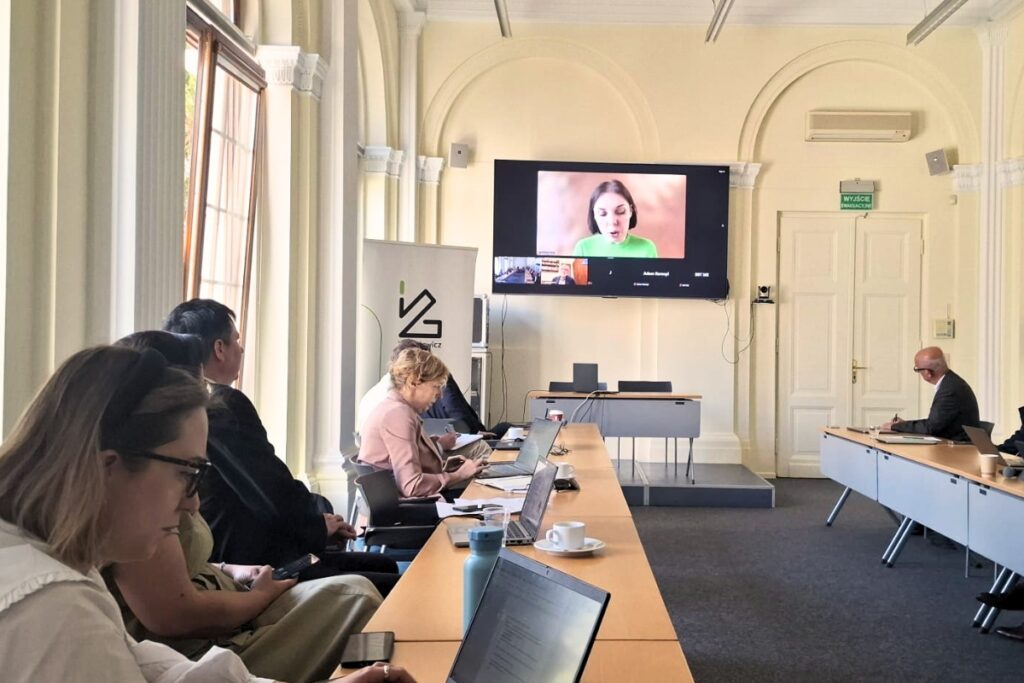
The one-day meeting builds on the Enlargement Hub project and is intended to test new concepts for managing the integration process, including the proposal to establish a specialized agency that would combine Ukraine’s reconstruction with its gradual integration into the European Union. Participants are discussing how to reconcile the principle of merit-based accession with the realities of a wartime economy, industrial policy, and sectoral integration in areas such as agriculture and infrastructure. Speakers include László Bruszt of the Central European University (CEU Enlargement Hub); Dariia Marchak of the Ministry of Economy of Ukraine; Michał Kapa, Government Plenipotentiary for the Ukraine Recovery Conference; Gérard Roland of the University of California, Berkeley; Veronika Anghel of the European University Institute; Melania Parzonka of the Polish Institute of International Affairs (PISM); Jerzy Plewa, former Director-General for Agriculture at the European Commission and currently an expert in the Team Europe Direct network; Erik Jones, Director of the Robert Schuman Centre for Advanced Studies at the European University Institute; Ivan Nagornyak, Policy Fellow at EPIK and adviser to Ukraine’s Deputy Prime Minister for European and Euro-Atlantic Integration; György Raskó, former Hungarian State Secretary for Agriculture; Oleksandra Avramenko, Chair of the European Integration Committee at the Ukrainian Agribusiness Club (UCAB); Andrew Schenkel of the Stockholm School of Economics; as well as other invited experts from Ukraine and EU Member States.
The workshop programme was structured around three main thematic sessions. The first focused on the broader challenges of managing the integration process under conditions of high uncertainty and explored how enlargement can be transformed from a zero-sum redistribution of costs into a process that generates shared benefits for both Ukraine and the EU Member States. The second panel examined agriculture as a testing ground for innovative approaches, exploring how concerns surrounding the opening of agricultural markets can be mitigated while unlocking opportunities for regional cooperation and joint investment. The third session addressed the “geopolitics of time,” asking whether the conventional, years-long accession pathway remains appropriate under wartime conditions and what a realistically accelerated yet credible trajectory toward EU membership could look like.
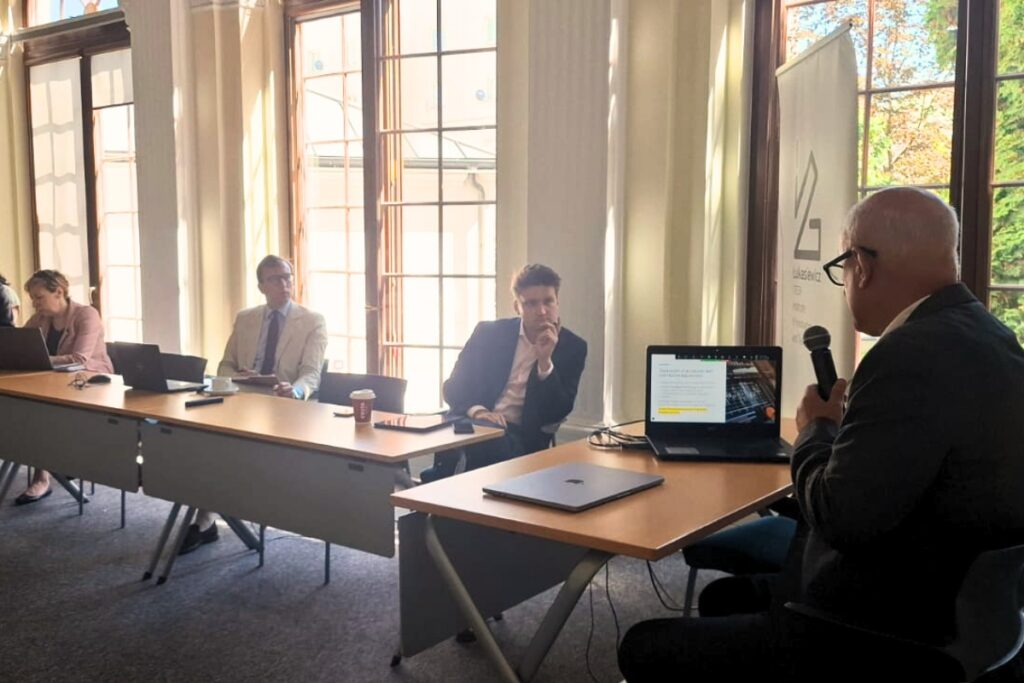
The workshop was co-organized by Łukasiewicz Research Network – ITECH, EUI Robert Schumann Centre and CEU Democracy Institute, under the ENTENTE – Jean Monnet Centre for Excellence project.
Photos: Łukasiewicz – ITECH