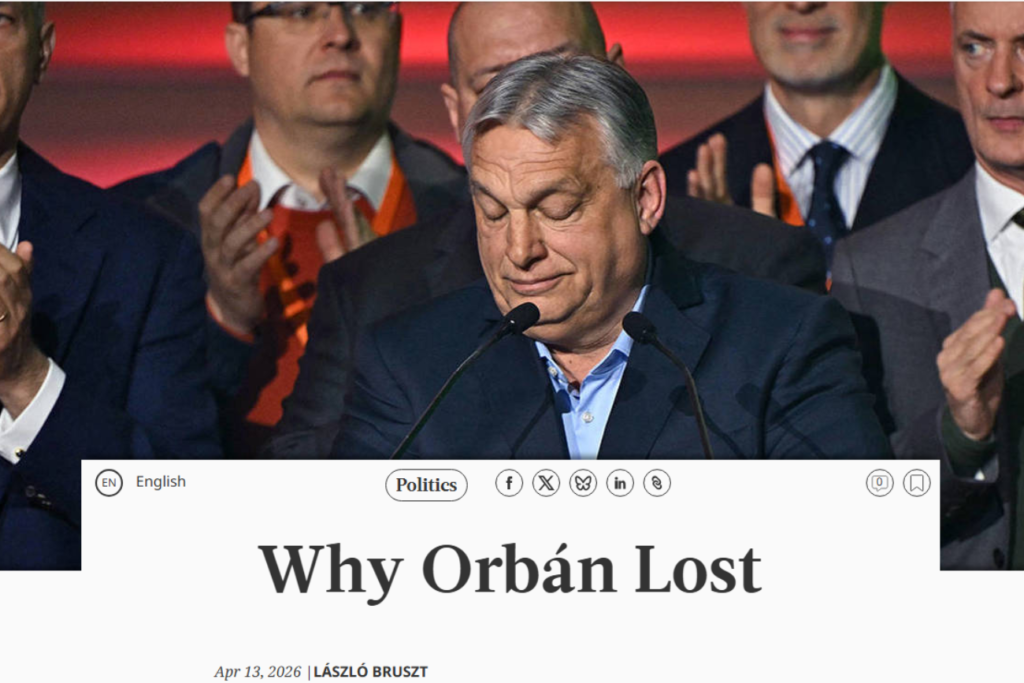
Orban has shown that even highly captured systems can become politically exposed. The very mechanisms that sustained illiberal rule could, over time, turn into sources of fragility, Global Forum program director and CEU Professor Emeritus Laszlo Bruszt argues in an op-ed on Project Syndicate.
In the piece, Laszlo Bruszt argues that the very logic that forms the basis of illiberal states undermines their economic foundation over time. “When political loyalty becomes the primary criterion for allocating resources, efficiency and innovation suffer,” he writes. He explains how this has happened in Hungary under Orban.
To defeat Fidesz, a credible challenger who could unite fragmented voters and turn frustration into organization was also needed. In Hungary, this is Peter Magyar and his Tisza party, which won the elections in a landslide victory.
As for the broader implications, he writes, “Orban’s fall does challenge the sense of inevitability that had surrounded the global drift away from liberal democracy.”
“Defeating illiberalism at the ballot box was hard. Building a resilient form of liberal democracy in its aftermath—one capable of delivering both accountability and inclusion—might be even harder.”
The article was published in Hungarian in Portfolio.hu. Reuters news agency also cited it in a piece on what Orban’s fall may mean for the markets.
Read the article here.