“If Europe wants to make credible commitments to Ukraine, it must lower the political costs of saying yes,” Laszlo Bruszt, CEU Professor Emeritus and Director of the DI’s Global Forum on Democracy and Development program, writes in an opinion piece for Project Syndicate.
In the article, Laszlo Bruszt argues that while Ukraine’s EU membership promises to bring large long-term benefits, its costs will be immediate. This is the reason why the EU seems hesitant to go forward. Member state governments face immediate domestic political risks. “EU governments are struggling to take the next step on Ukraine’s accession, not because enlargement lacks strategic value, but because the domestic political risks are front-loaded, while the benefits lie in the future. In other words, Europe is trying to make a high-risk strategic investment without insurance,” he writes.
He makes a number of suggestions on how to get over the obstacles, including being honest about the adjustment costs. He argues, “The question is not whether enlargement entails costs. It is whether those costs will be absorbed in an unmanaged and politically destabilizing way, as
opposed to being shared and smoothed out over time.”
Further, he argues, the EU must ensure that it remains credible to Ukraine. It must show that it is committed that meeting the accession criteria will lead to full membership.
“Ukraine’s accession is about much more than Ukraine. It is about whether the EU can adapt its enlargement model to a world where geopolitics and economics are tightly intertwined.”
Read the piece here (behind paywall).
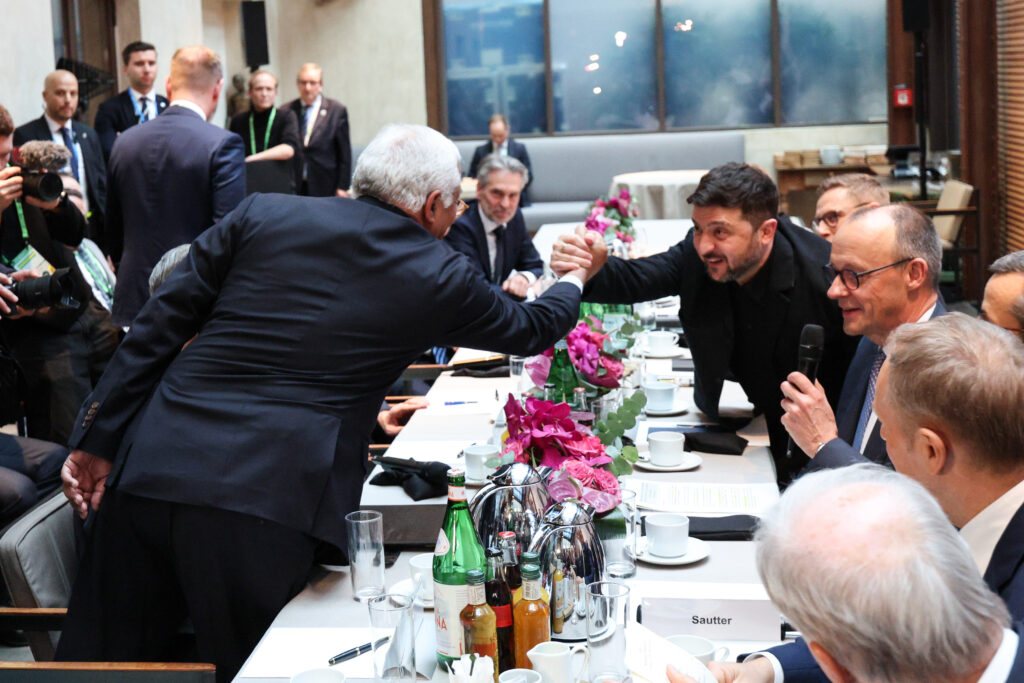
Cover photo: European Union, 2026, licensed under CC BY 4.0